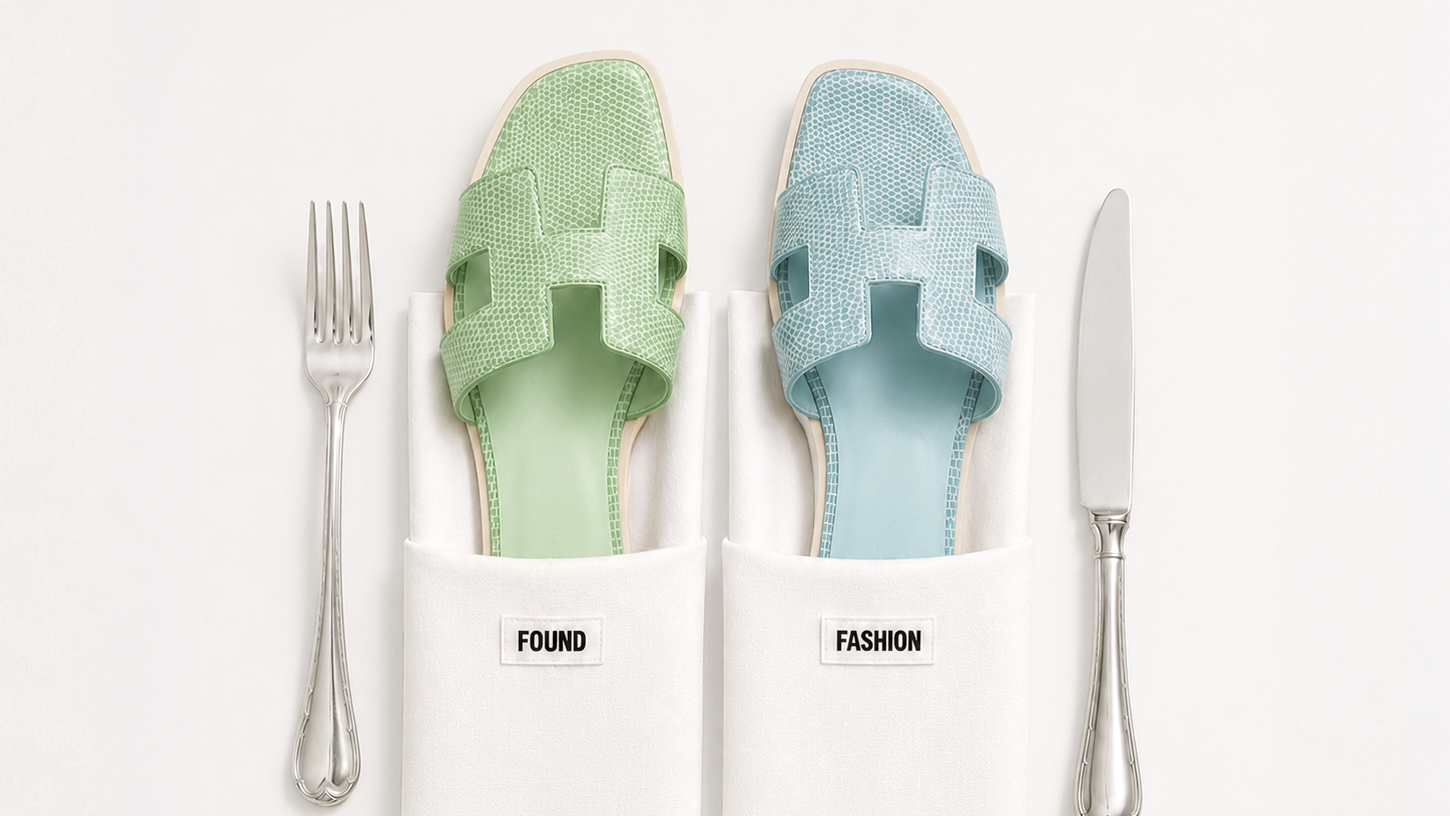
Some designs are carefully engineered to become icons. The Hermès Oran sandal is not one of them.
Created in 1997, the Oran has become one of the most recognisable - and most copied - shoes in luxury fashion. Defined by a single leather strap with an H-shaped cutout, it looks almost too simple to matter. And yet, nearly thirty years on, it still does.
This is the story of how that happened.

The man who stayed
Pierre Hardy did not come up through fashion in the usual way.
He danced first. Then he taught art. Then he illustrated. Shoe designing arrived later after his drawings caught attention from the world of fashion. By the late 1980s, he was working in footwear. Not long after, he joined Hermès, where he was given a quiet but significant brief: to give footwear a language of its own inside a house already defined by leather, silk, and saddlery. In 1997, he drew the Oran.
"A bare foot with something painted on it" - Pierre Hardy
There was no strategy behind it. No idea of creating an icon. Just a desire to strip a sandal back to its purest form - something that felt like a bare foot, slightly elavated. A piece he once described as feeling like “a bare foot with something painted on it.”
He spent over three decades at Hermès - an almost unheard-of continuity in the fashion world. While others rotate through houses and headlines, Hardy stayed. Not loudly. Not theatrically. Just consistently.

A name that travels
The name Oran comes from the Algerian coastal city, giving the sandal a quiet sense of warmth and travel.
The H-shaped cutout is not simply a logo. It is the entire design. It frames the foot. It creates the shape. It gives the sandal its identity. Take it away, and there is almost nothing left.
That is what makes it work - and what makes it difficult to replicate. The branding is not added on. It is the structure.
The logo is no longer decoration. It is the sandal.

Why it works
At first glance, the Oran feels almost too simple: one strap, one cutout, a flat sole, a padded insole. That’s it.
But simplicity like this is unforgiving. With so little happening, every decision matters - proportions, spacing, balance, the way it sits against the foot. There is nowhere to hide.
It looks effortless because every detail has been thought through
Material is everything
The Oran in its original form is cut from box calfskin - the same leather used across Hermès leather goods. At first touch, it is structured, almost resistant. It doesn’t immediately give in. Then it changes.
With wear, it softens. It shifts. It begins to mould to the foot in a way that feels less like breaking in and more like becoming. Not dramatic. Just precise. Personal.
It is also what imitation sandals cannot reproduce. The outline is easy to copy but the experience is not.
Over time, the Oran has appeared in almost every material the house can justify: box calfskin, Epsom, Swift, suede, shearling, canvas, denim, ostrich, and alligator - with rare crocodile versions sitting at the very top of the Hermès hierarchy.
Box Calfskin
The classic. Structured at first, softens beautifully with wear. Ages the best of any option.
Epsom
More durable and scratch-resistant. Holds its shape. The practical choice.
Suede
Softest feel. Needs more care. Best for warm, dry climates.
Denim
Casual, lighter, and more playful. A seasonal version that makes the Oran feel less formal.
Canvas
Relaxed and casual. Best for a softer everyday summer vibe.
Exotic Leathers
Ostrich, alligator and crocodile sit at the top of the hierarchy. Rare, striking, declarative.

The easiest place to begin
Within Hermès, the Oran sits at one of the more approachable entry points - still considered, still expensive, but not remote in the way many of the house’s most famous items can be.
More importantly, it carries the same restraint found across the brand’s most iconic pieces: strong materials, controlled design, and a refusal to explain too much.
If you start anywhere, this is the logical place. Choose a colour that feels like you. Wear them often. Let them age. Over time, they will begin to shift - not just in shape, but in meaning.
Because the Oran was never only about the strap or the cutout.
It was about how little a design needs to become part of someone’s life.
The Hermès Oran sandal was created in 1997 by Pierre Hardy. Its simple flat shape and H-shaped cutout have made it one of the most recognisable sandals in luxury fashion.
Generally, yes. If you have wider feet or a higher instep, going up half a size can make them more comfortable. The leather will soften slightly over time.
Gold is the most classic and versatile shade, especially for summer. Neutrals such as black, white, and etoupe are easy to wear, while seasonal colours such as vert fizz make the sandal feel more playful and personal.
Box calfskin is the classic - it ages beautifully. Epsom is more durable and holds its shape. Suede feels softer but needs more care.


